Breaking Boundaries: The Science, Physiology, and Legacy of World Swimming Records
In the world of competitive sports, few feats capture human performance in its purest form quite like breaking a swimming record. Unlike land-based sports where gear, turf, or external conditions vary wildly, pool swimming takes place in a highly regulated, standardized environment. The water is kept at precise temperatures, lanes are engineered to dissipate wave resistance, and electronic touchpads measure time down to the hundredth of a second. Against this backdrop of absolute precision, lowering a swimming world record is a raw testament to human biomechanics, technological innovation, and relentless physical conditioning.
From the pioneering era of Duke Kahanamoku and Johnny Weissmuller to the golden ages led by Mark Spitz, Michael Phelps, Katie Ledecky, and Léon Marchand, swimming records have continually pushed the boundaries of human capacity. Here is an in-depth look at how swimming records are shattered, the physical science behind human speed in water, and the historical milestones that changed aquatic sports forever.
1. The Evolution of Aquatic Speed: A Brief History of Records
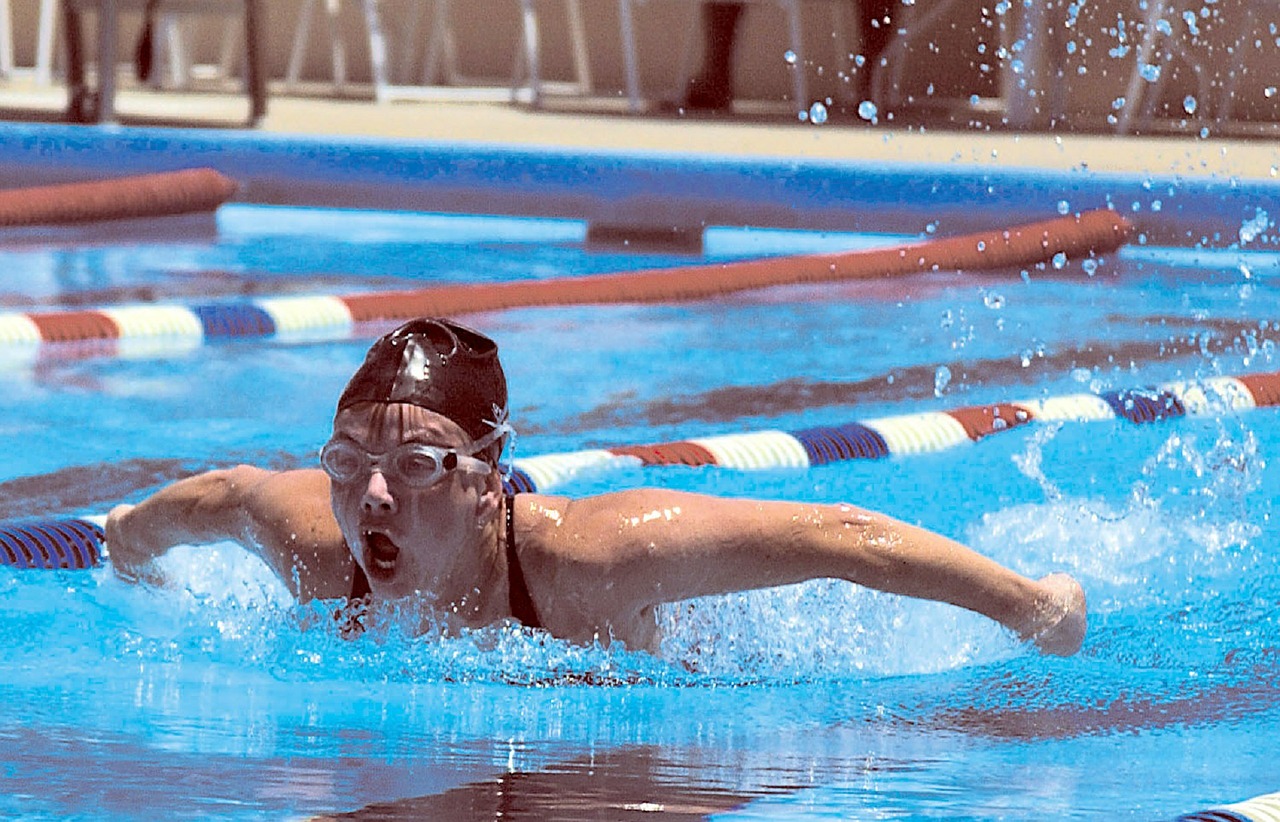
The history of competitive swimming records reflects a century-long pursuit of efficiency. In the early 1900s, breaking a record was largely a matter of discovering better stroke mechanics. The evolution from the classic breaststroke to the front crawl, followed by the formal development of the butterfly stroke in the 1950s, dramatically reshaped what was thought possible in water speed.
Key historical eras that redefined swimming record books include:
- The Mark Spitz Era (1972): At the Munich Olympic Games, Spitz set a legendary benchmark by winning seven gold medals, setting a world record in every single event—a staggering feat that stood unchallenged for over three decades.
- The Michael Phelps Reign (2000s): The most decorated Olympian in history, Phelps systematically dismantled long-standing world records across butterfly, individual medley, and freestyle events, culminating in his iconic eight gold medals in Beijing in 2008.
- The Super-Suit Era (2008–2009): The introduction of full-body polyurethane swimsuits led to an extraordinary flood of 43 world records broken at the 2009 Rome World Championships alone. The technology reduced drag so dramatically that international swimming authorities (FINA) ultimately banned non-textile suits to preserve the integrity of physical performance.
- The Modern Era of Power and Technique: Today’s record holders, such as Katie Ledecky in distance freestyle or Léon Marchand in the individual medley, rely on scientific underwater camera analysis, metabolic conditioning, and underwater dolphin kicks to shatter records previously thought untouchable.
2. The Physiology of a Record-Breaking Swimmer
Water is roughly 800 times denser than air, meaning the primary enemy of any swimmer is fluid resistance, or drag. Breaking a swimming record requires an athlete to maximize propulsion while minimizing surface drag to near-zero levels.
Top physiological traits of record-setting athletes include:
Unmatched Anthropometrics
World-record swimmers often possess distinct physical traits: long torsos, long wingspans that act as extended oars, large feet that function like natural flippers, and hyper-mobile ankles that allow for maximum water displacement during kicking cycles.
Extreme Aerobic and Anaerobic Capacities
Distance record holders maintain a massive $VO_2$ max—the maximum amount of oxygen the body can utilize during intense exercise. Sprint record holders, conversely, possess specialized fast-twitch muscle fibers capable of generating explosive, short-burst power in high-lactate conditions.
Mastery of the Underwater Dolphin Kick
Often referred to as the “fifth stroke,” the underwater dolphin kick executed off walls during starts and turns is the fastest a human can travel through water. Record holders maximize the allowed 15-meter underwater zone to maintain momentum generated from the starting block or wall push-off.
“In swimming, you don’t fight the water; you partner with it. A world record isn’t just set by pulling harder, but by slipping through the water with the least possible resistance.”
3. Technological Advances: How Pools and Gear Impact Times
While athletic talent is the core engine behind any record, human performance is heavily supported by engineering. Modern record-breaking swims take place in “fast pools” specifically designed to neutralize water turbulence:
- Deep Pools (3 Meters Standard): Deep water prevents surface waves from bouncing off the bottom floor and reflecting back toward the swimmers, keeping the water calm.
- Gutter and Lane Line Design: Modern lane ropes utilize rotating turbine blades that absorb wave energy rather than rebounding it into adjacent lanes.
- Wedge Starting Blocks: Modern starting blocks feature angled footrests (similar to track blocks) that allow swimmers to push off with maximum explosive leg force.
- Advanced Goggles and Caps: Hydrodynamic dome caps and low-profile, rigid goggles minimize micro-drag around the head and facial structures.
4. The Psychological Threshold: Crossing the Barrier
Just as Roger Bannister broke the mental barrier of the 4-minute mile in running, swimming has its own historical psychological walls. For years, breaking 48 seconds in the 100-meter freestyle or 1 minute in the 100-meter breaststroke was considered a physical impossibility.
Once a major time barrier is broken by a single athlete, others quickly follow. This phenomenon proves that breaking a swimming record is as much a mental breakthrough as a physical one. Elite swimmers use visualization, biofeedback, and race-pace mental modeling to train their nervous systems to operate at speeds never before achieved.
5. How Young Swimmers Can Train for Peak Speed
While setting a world record is reserved for elite competitive athletes, any swimmer can apply the core principles of record-holders to lower their personal best (PB) times:
- Prioritize Streamline Position: Every lap should begin with a tight, hand-over-hand streamline off the wall to build habituated low-drag habits.
- Record and Analyze Stroke Count: Track your stroke count per lap. Increasing distance per stroke (DPS) allows you to move faster with less energy expenditure.
- Focus on Core Stability: A strong core prevents hips from snaking or dropping in the water, maintaining an inline body position that cuts through drag.
- Refine Starts and Turns: Flip turns and block starts are where precious split-seconds are won or lost. Treat every turn in practice with race-level intensity.
The Takeaway: The Unending Quest for Speed
Swimming records represent the ultimate intersection of human determination, biological capability, and scientific innovation. As training techniques refine and aquatic engineering advances, the limits of human speed in water continue to be rewritten.
Every time an athlete touches the wall and looks up to see new record numbers on the scoreboard, it serves as an inspiring reminder that human potential has no final finish line!