
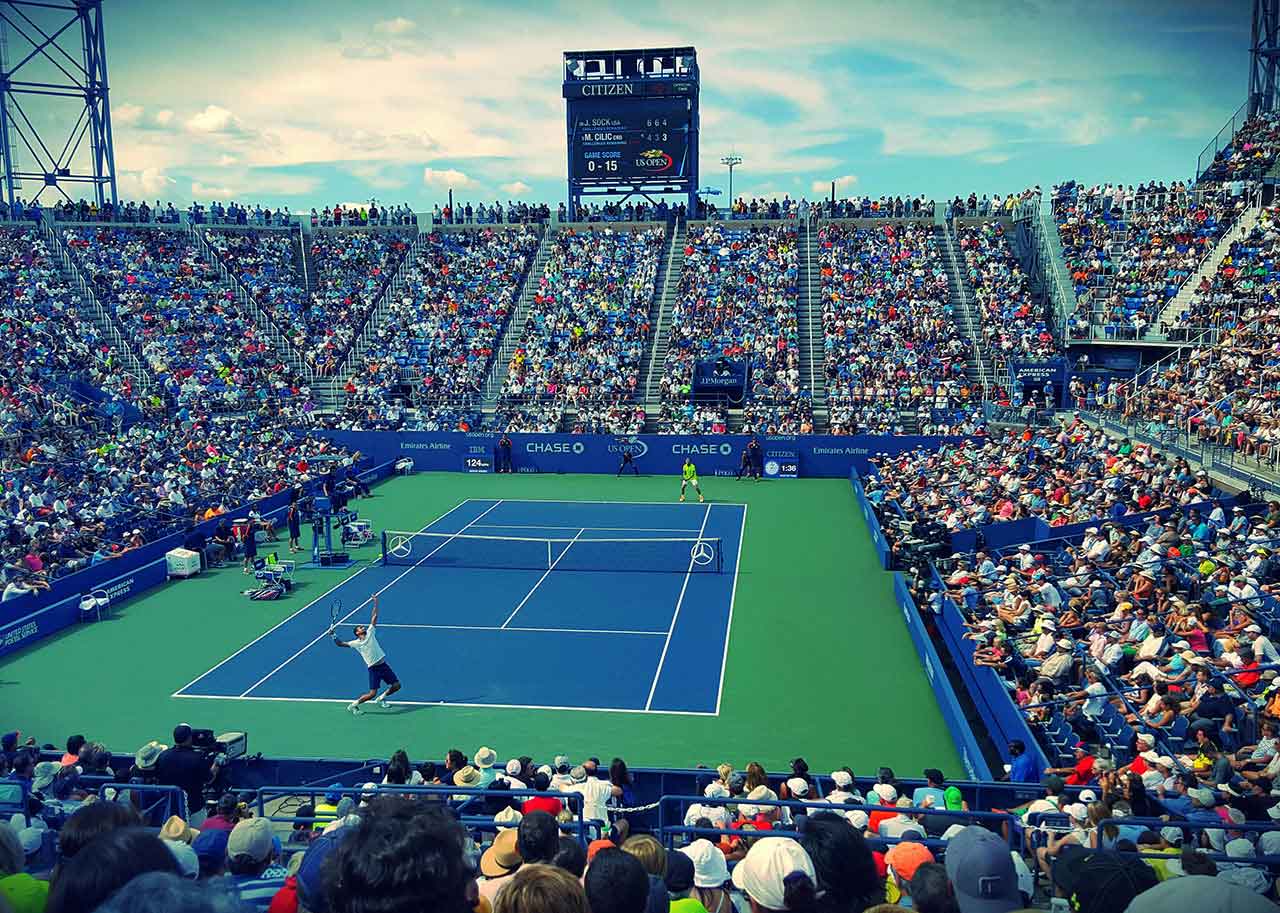
Tennis Match: Go Federer
In the long, storied history of professional sports, few athletes have managed to transcend their discipline quite like Roger Federer. Beyond the staggering array of titles, record-breaking streaks, and statistical milestones, the Swiss icon did something far more rare: he elevated tennis into an art form. To watch Federer at his peak was to witness a master class in effortless grace, tactical genius, and unparalleled athleticism—a combination that redefined what it meant to be a champion in the modern era.
While arguments over the “Greatest of All Time” (GOAT) often center purely on raw numbers, Federer’s legacy is defined as much by how he played as what he won. Here is an in-depth look at the elements that made Roger Federer a singular force in sports history and why his impact on tennis will endure for generations.
1. The Aesthetics of Perfection: Poetry in Motion
Before diving into statistics, one must begin with the visual experience of watching Federer play. In a modern era characterized by brutal baseline grinding, heavy topspin, and extreme physical strain, Federer operated like a ballet dancer in sneakers. Author David Foster Wallace famously described Federer’s court movement and signature forehand as “a great liquid whip,” capturing the near-supernatural fluidity of his game.
Key technical hallmarks of his play style included:
- The One-Handed Backhand: A stroke of sheer elegance, capable of switching seamlessly from a razor-sharp slice that skidded low off the court to a soaring topspin winner hit on the rise.
- Effortless Footwork: Federer seemed to glide across the surface rather than squeak or slide, positioning himself early for every shot and making grueling five-set matches look entirely comfortable.
- Unreadable Serve Placement: Rather than relying on brute velocity alone, Federer possessed one of the most disguised serve tosses in tennis history, pinpointing corners with surgical precision under extreme pressure.
This technical perfection meant Federer rarely looked hurried or out of breath. He made the most difficult athletic maneuvers on earth look entirely natural, captivating audiences far beyond traditional tennis fans.
2. An Unrivaled Era of Dominance (2004–2009)
While Federer’s longevity extended across more than two decades, his peak period from 2004 to 2009 stands as one of the most dominant stretches any individual athlete has ever achieved in sport.
During this golden window, Federer fundamentally dismantled the competition:
- 237 Consecutive Weeks at World No. 1: From February 2004 to August 2008, Federer held the top spot in the ATP rankings without interruption—a record that still stands untouched in men’s tennis.
- 10 Consecutive Grand Slam Finals: Starting with the 2005 Wimbledon Championships through the 2007 US Open, Federer reached every single major final, winning eight of them.
- 23 Consecutive Grand Slam Semifinals: Demonstrating staggering consistency across hard, clay, and grass courts, he reached the final four of every major tournament for nearly six consecutive years.
He achieved back-to-back “five-peat” titles at both Wimbledon (2003–2007) and the US Open (2004–2008), establishing a level of multi-surface mastery that forced the entire tennis landscape to raise its standard.
“In an era of relentless physicality, Federer proved that supreme technique, fluid movement, and creative instinct could conquer the world.”
3. The Golden Rivalries That Defined an Era
Greatness is rarely forged in a vacuum. Federer’s career was amplified by his involvement in what is widely recognized as the greatest era in tennis history—the era of the “Big Three.” Alongside Rafael Nadal and Novak Djokovic, Federer pushed the physical and strategic boundaries of the sport to unprecedented heights.
His rivalry with Rafael Nadal, in particular, captured the global imagination as a clash of contrasting philosophies: the right-handed Swiss artist versus the left-handed Spanish powerhouse. Their 2008 Wimbledon final—often cited as the greatest tennis match ever played—symbolized this epic push-and-pull dynamic.
Far from diminishing his legacy, Federer’s battles with Nadal and Djokovic elevated it. Rather than fading as younger rivals emerged, Federer continuously reinvented his game to stay competitive deep into his thirties.
4. Longevity, Evolution, and the 2017 Renaissance
One of the true tests of athletic genius is adaptability. As Federer aged and recovered from unprecedented knee surgeries in his mid-30s, critics routinely predicted the end of his championship reign. Instead, he staged one of the most remarkable comebacks in modern sports history.
At the 2017 Australian Open—returning after a six-month injury lay-off at age 35—Federer introduced a tactical revolution:
- The “SABR” and Aggressive Backhand: Switching to a larger racquet head, Federer started taking Nadal and Djokovic’s heavy topspin early on the backhand side, stepping inside the baseline to shorten points and take away recovery time.
- The 20th Major Title: His emotional victory in Melbourne, followed by an eighth Wimbledon crown later that year and a 20th Grand Slam title at the 2018 Australian Open, proved that his tennis intelligence could triumph over time itself.
- Oldest World No. 1: In February 2018, at 36 years and 195 days old, Federer returned to the summit of the ATP rankings, becoming the oldest male World No. 1 in history at the time.
5. The Global Ambassador: Class On and Off the Court
Greatness extends far beyond trophies and forehands. Federer’s appeal was universal because of how he conducted himself as a competitor. A record 13-time recipient of the Stefan Edberg Sportsmanship Award (voted on by his fellow players), he treated opponents, officials, and ball kids with genuine warmth and respect.
Beyond the tour, his philanthropic work through the Roger Federer Foundation has invested tens of millions of dollars into early childhood education initiatives across Southern Africa and Switzerland, impacting over two million children.
When he played his final emotional match at the 2022 Laver Cup—doubles alongside his greatest rival and close friend Rafael Nadal—the outpouring of affection from fans, peers, and fellow sporting legends reflected his true standing: he was not just a tennis player, but a universal symbol of grace under pressure.
The Takeaway: An Everlasting Legacy
Numbers can be matched and records will eventually fall, but style, elegance, and emotional impact cannot be erased. Roger Federer did not merely play tennis; he transformed how the world viewed the sport. By blending supreme athleticism with unmatched artistry and timeless class, the Swiss Maestro set a gold standard for sporting greatness that will inspire athletes for decades to come.